Bungalow basements
A bungalow has a full basement under the whole house, which makes it the most useful basement in the city, and one worth looking at carefully before it is covered.
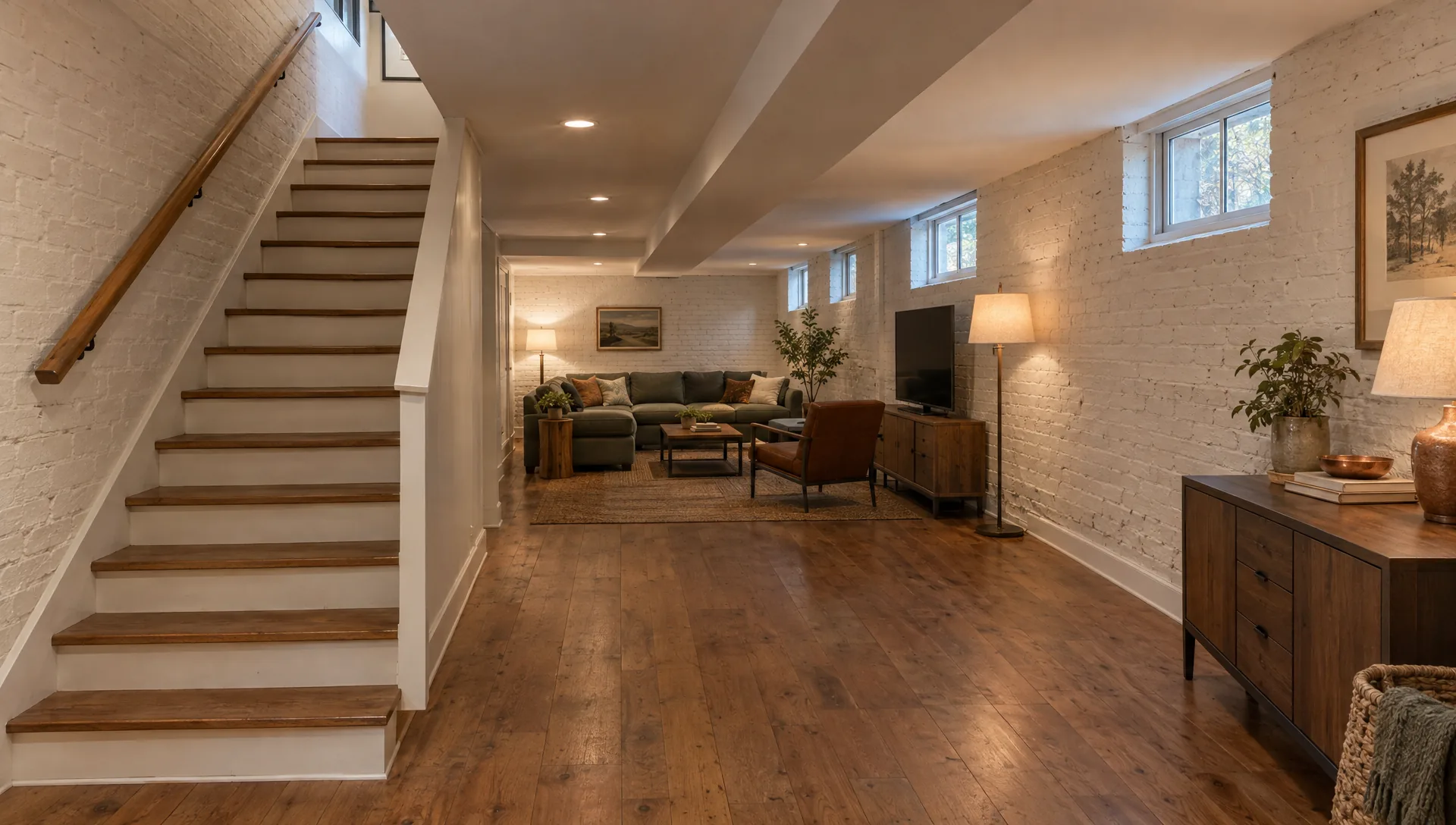
Chicago bungalows are brick houses built from about 1910 into the mid-1930s, one and a half stories over a full basement. That basement runs the length of a long, narrow footprint, so it is a good shape to work with: a stair at one end, a mechanical room, and a long room that can be zoned.
What is usually there
- A full-height basement under the entire footprint, often with the original stair running along a side wall
- Brick or masonry foundation walls, sometimes painted or parged over many times
- The original furnace location in the middle of the floor, often replaced but left where it was
- A floor drain and sometimes a laundry tub or a second old drain
- Small, high basement windows, often painted shut

Our planning notes for a bungalow
Because the footprint is long and narrow, the first decision is where the noise goes. Put a family or play zone near the end farthest from the bedrooms upstairs and keep the stair end quiet. The original mechanical location rarely moves cheaply, so plan around it with reachable clear space instead of closing it in.
Basement windows in a bungalow are often set high and small. A bedroom needs a code-compliant exit window, and in a bungalow that usually means cutting down a window opening and adding a well. See our page on egress windows.
The brick walls have likely seen decades of seasons. Look for repointing needs and efflorescence, and read our page on walls before anyone frames against them.
Read next: Chicago bungalows · Egress windows · Walls and insulation
Questions
Can I finish the whole bungalow basement?
Usually, yes, with the mechanical area kept clear and reachable. How much of it is a sensible plan depends on moisture, ceiling height and what you want to use it for.
Is my bungalow basement damp?
Many older basements have taken on water at some point. Signs include white powder on masonry, stained paint and a musty smell after rain. Our water page explains how to read them.
Homes where this comes up
Keep reading
Sources checked
Checked September 30, 2026. Codes and programs change. Check the current rule with your city or village before you rely on it.
Own a house like this?
Send photos and a few words about the building with an estimate request, or call.