Walls, insulation and air
A basement wall should let the foundation dry, keep the finished surface warm and keep organic material away from damp concrete.
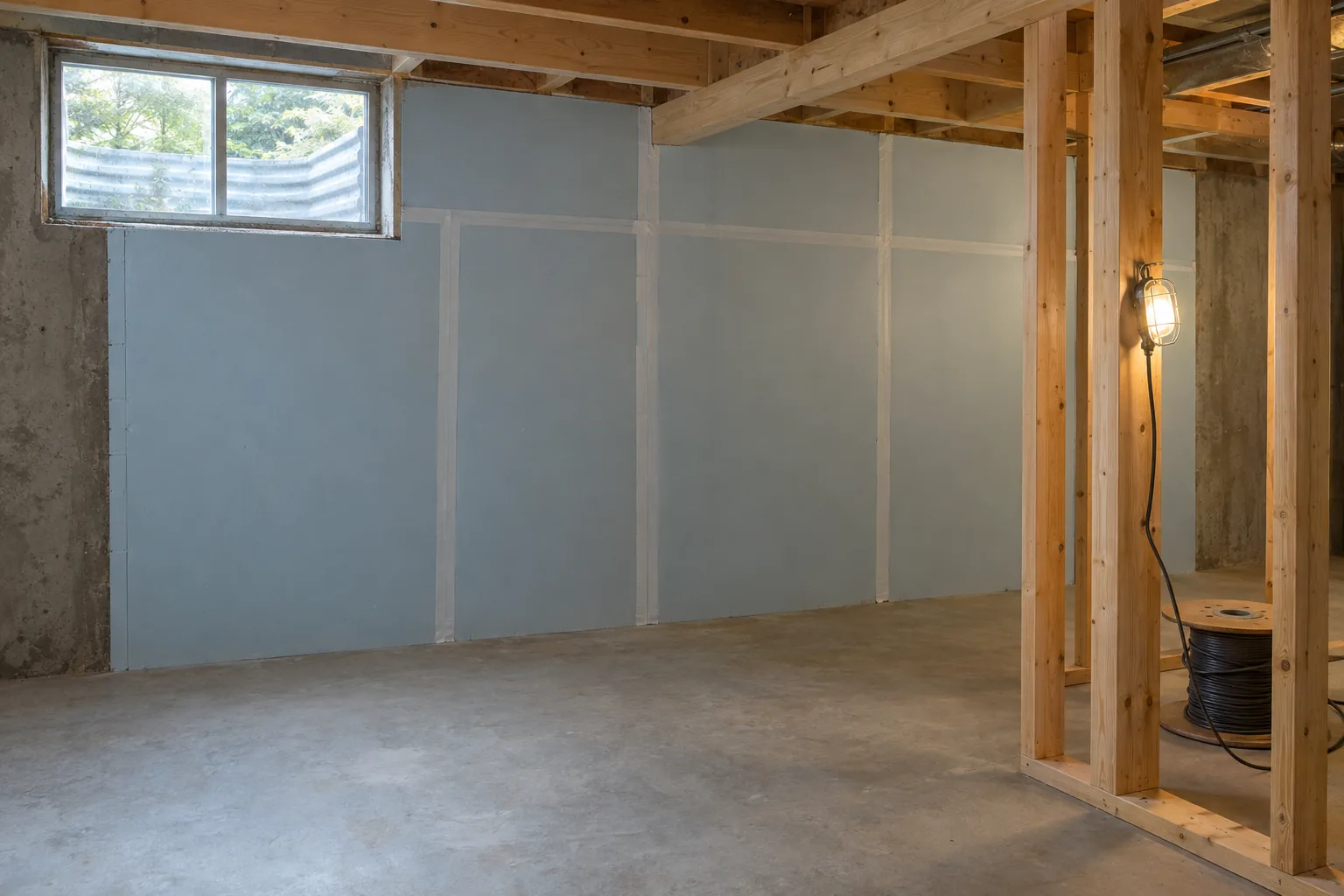
The foundation wall is the coldest and often the dampest surface in the house. Finishing it is a matter of letting it breathe and keeping warm indoor air from meeting its cold surface. Get that wrong and you have a mildew machine behind a painted wall.
Three principles
- Keep organic material off damp masonry. Paper-faced drywall and untreated wood against a damp wall feed mold. Where wood must touch concrete, use treated lumber or a barrier.
- Insulate with something that tolerates moisture. Rigid foam board against the wall, sealed at the seams, is a common choice because it does not absorb water. Fiberglass batts pressed against cold concrete can collect moisture and drop.
- Leave a way for the wall to dry. A foundation that has to shed moisture needs a path out. Sealing it behind an airtight wrap can trap what you were trying to remove, which is why the water question comes before the wall.
Old masonry and bungalow foundations
Many older Chicago houses stand on brick or rubble-stone foundations, some with lime-based mortar. These walls take on and release moisture in ways modern poured concrete does not. They often need repointing before they are covered, and some are better left visible, whitewashed or sealed with a breathable coating than wrapped in plastic. Robert looks at the wall type at the walk-through and tells you what he sees.
Air leaks matter as much as insulation
The top of a foundation wall, where the framing sits on it, is the leakiest part of a house. Sealing the rim joist and the penetrations makes a basement warmer than adding another inch of wall insulation. Combustion appliances need air, so sealing is coordinated with the heating system.
Questions
Can I put drywall directly on the foundation?
It is a poor idea. Drywall is paper-faced and the wall is cold and often damp. A framed wall with a gap and a moisture-tolerant insulation is the normal way.
Should I insulate the floor too?
In some basements it makes a room noticeably warmer. A floor with a built-in air gap does a version of it. It is decided with the floor.
Homes where this comes up
Keep reading
Tell Robert about your project.
Call, email or send an estimate request with photos. You deal directly with the person running your job. Robert replies within 2 business days.