Sewer backup and flood control
Sewer backup is a different problem from seepage. During intense storms the sewer can push water into a basement through its own drains, and nobody can promise it will never happen.
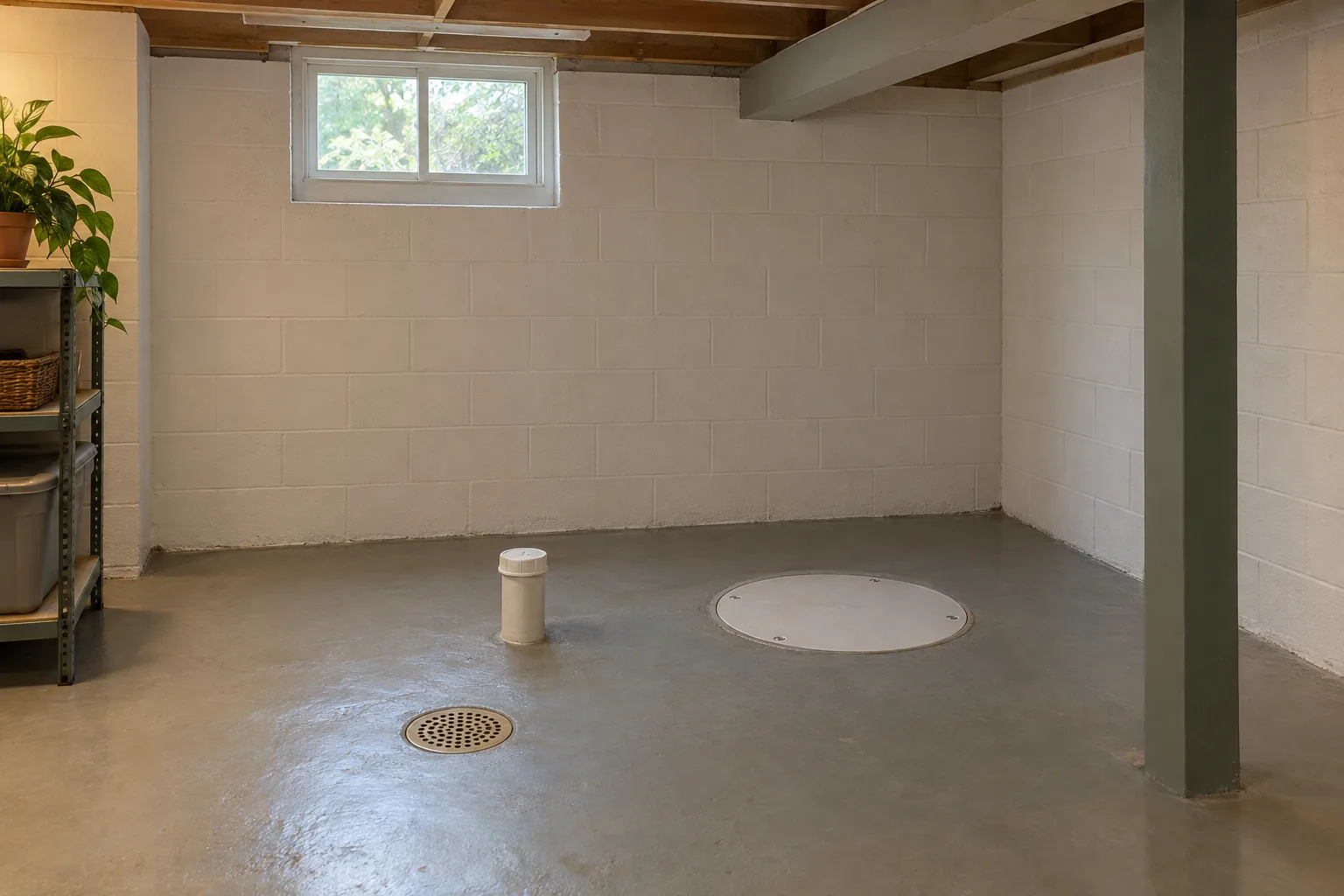
Older Chicago-area homes may sit on a combined sewer that carries both household waste and storm water. When it fills, water can come back up the pipes that go into your house. A finished basement has more to lose from that than a bare one, which is why this question comes before the finishing, not after.
What the City says
- During intense storms, sewer mains fill up, and additional water pushes into basements through the private sewer drains.
- The City recommends disconnecting downspouts from the drainage system.
- The City says nobody can promise you will never flood, and that it is not allowed to perform work on private property, so owners must make changes themselves.
The options you will hear about
Reporting by WBEZ describes three common measures: a check or backflow valve in the private sewer, an overhead sewer, and a standpipe sealed into the floor drain. An overhead sewer is described as a major reconstruction of the home's internal plumbing that pumps wastewater from basement fixtures to a pipe in the basement ceiling or on the first floor. The same report notes that these solutions tend to be costly, and that they can push the problem onto neighbors who have no protection.
| Measure | What it does | What to ask |
|---|---|---|
| Backwater (check) valve | Closes the private sewer line when flow reverses | Where it is installed, how it is reached for cleaning and what happens when it is closed and you use water |
| Overhead sewer | Lifts basement waste above the level a backup will reach | What fixtures it serves, the pump, the alarm and power-outage plan, and the permit |
| Floor-drain standpipe | Blocks the floor drain from the inside during a backup | Who puts it in place during a storm, and what the drain does the rest of the year |
Before you finish a basement that has flooded
- Ask your insurer whether sewer backup is covered, and how. Some homeowners learn after a flood that it is not, or that it is limited.
- Ask your city or village whether a backwater valve or overhead sewer needs a permit.
- Check whether your city or village offers any flood-control program. We found none listed on the City of Chicago page we read, and some suburbs have offered rebates in the past. Confirm any current program with the office directly.
- Choose materials that survive a wet floor: tile or sealed concrete near the drain, wall materials that do not wick, and furniture on legs.
- Keep outlets, panels and appliances up off the floor where the plan allows it.
Questions
Will a backwater valve stop my basement from flooding?
It addresses one route, backflow through the private sewer. It does not address seepage, window wells or roof and gutter water, and the City says nobody can promise you will never flood.
Does a new basement bathroom raise the risk?
Any fixture below the sewer line is a path for backup. In older houses with a combined sewer, a pump and backflow protection are discussed from the start.
Homes where this comes up
Keep reading
Sources checked
Checked November 5, 2026. Codes and programs change. Check the current rule with your city or village before you rely on it.
Tell Robert about your project.
Call, email or send an estimate request with photos. You deal directly with the person running your job. Robert replies within 2 business days.