Basement units and suites in Chicago
In Chicago, a separate unit in a basement is a regulated process with its own approval. Check whether your address qualifies before you spend anything on a kitchen or an entrance.
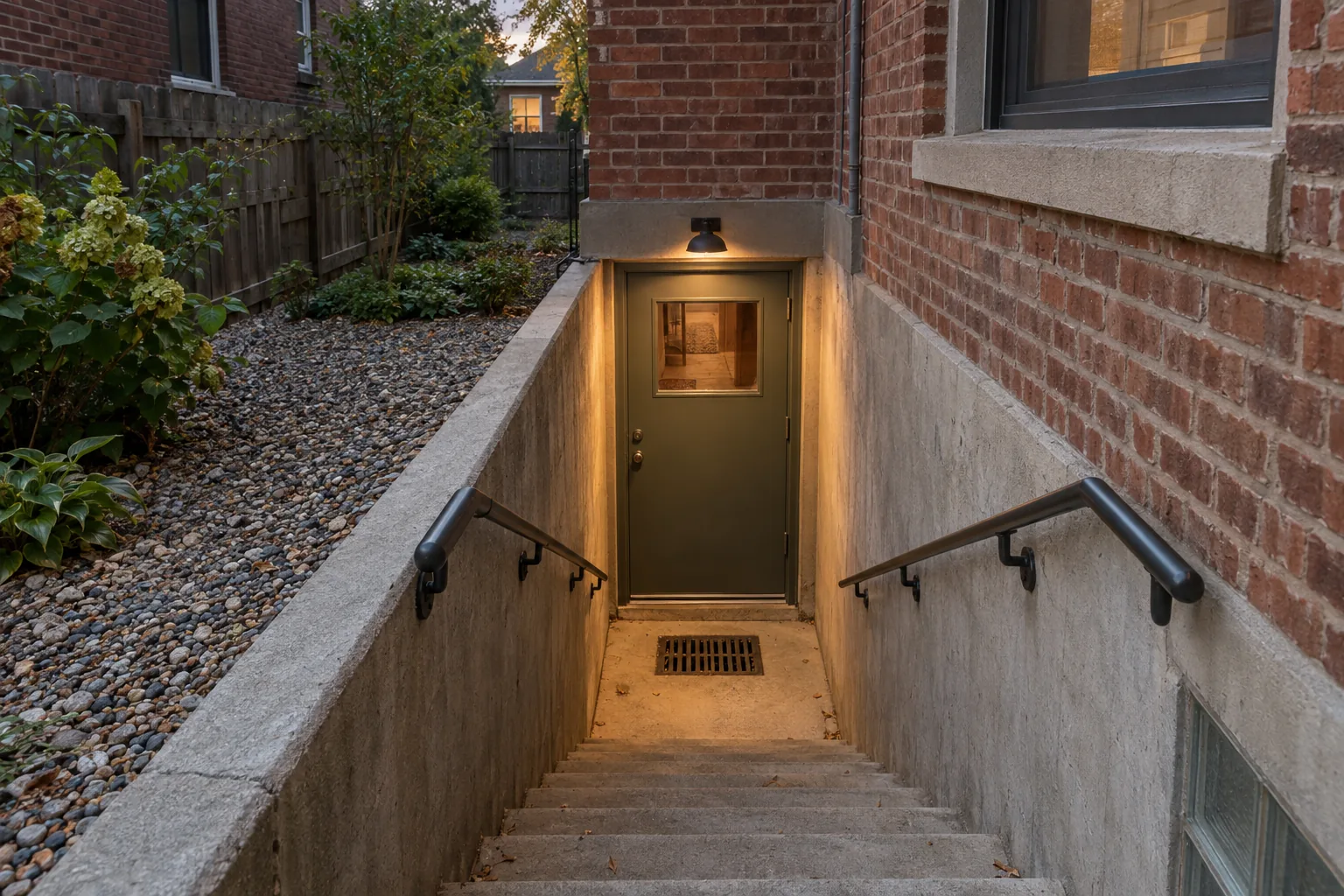
The City of Chicago allows additional dwelling units, including units in basements, under an ordinance that has been expanded since it began as a pilot. Facts below are taken from the City's own pages, read on the date shown. They are a summary, not advice for your address.
What the City says
- A conversion unit is connected to the existing building, for example within an attic or basement. A coach house is detached.
- City Council first approved the ordinance in 2020 with five pilot areas. In September 2025 it voted to expand the ordinance beyond the pilot, allowing additional units more broadly across the city.
- Additional units are allowed by right in all multi-unit residential and certain business and commercial zoning districts. Lots zoned for single-family use only qualify inside an area the City designates as ADU-allowed.
- To be eligible for a conversion unit, the principal building must be at least 20 years old. A property with four or fewer existing dwelling units can add one additional conversion unit.
- Short-term leases and vacation rentals are not permitted in conversion units.
- Where an owner-occupancy requirement applies, the owner must show proof.
The steps the City describes
- Pre-certification. The Department of Housing reviews the project first. The City states that pre-certification does not automatically mean a project is permissible.
- A plan-based building permit. The Department of Buildings reviews drawings, and the City says the project is designed by a licensed architect or structural engineer.
- Construction and inspection. The unit has to meet the building code for the work; the drawings show how.
What this means for you
A basement is not a legal apartment because it has a kitchen and a door. Do not rent a finished basement as a separate home in Chicago without checking your address against the City's eligibility rules and getting the approvals. We will not describe a space as a legal unit until that has been confirmed for the address.
Neighborhood Housing Services of Chicago adds that a legal basement unit needs enough light plus one direct or two indirect exits, and that two-flat utilities are already metered and sized for more than one unit. In the suburbs, rules on basement units vary by village, so ask your village.
Questions
Can I rent my finished basement?
As a separate home, only if the unit is allowed and approved where you live. In Chicago that means pre-certification and a plan-based permit. Check before you spend anything.
Can I use it for short-term rentals?
The City says short-term leases and vacation rentals are not permitted in conversion units.
Homes where this comes up
Keep reading
- Guest suites and extra bedrooms
- Egress windows
- Two-flat and cottage basements
- Basement permits and inspections
Sources checked
Checked November 5, 2026. Codes and programs change. Check the current rule with your city or village before you rely on it.
- City of Chicago: Additional Dwelling Units ordinance (opens in a new tab)
- City of Chicago ADU: eligibility (opens in a new tab)
- City of Chicago ADU: requirements (opens in a new tab)
- City of Chicago ADU: process (opens in a new tab)
- Neighborhood Housing Services of Chicago: common basement conversions (opens in a new tab)
Tell Robert about your project.
Call, email or send an estimate request with photos. You deal directly with the person running your job. Robert replies within 2 business days.