Home gyms
A good basement gym is cool, dry, well lit and does not shake the kitchen. Most of that is air, floors and ceiling height.
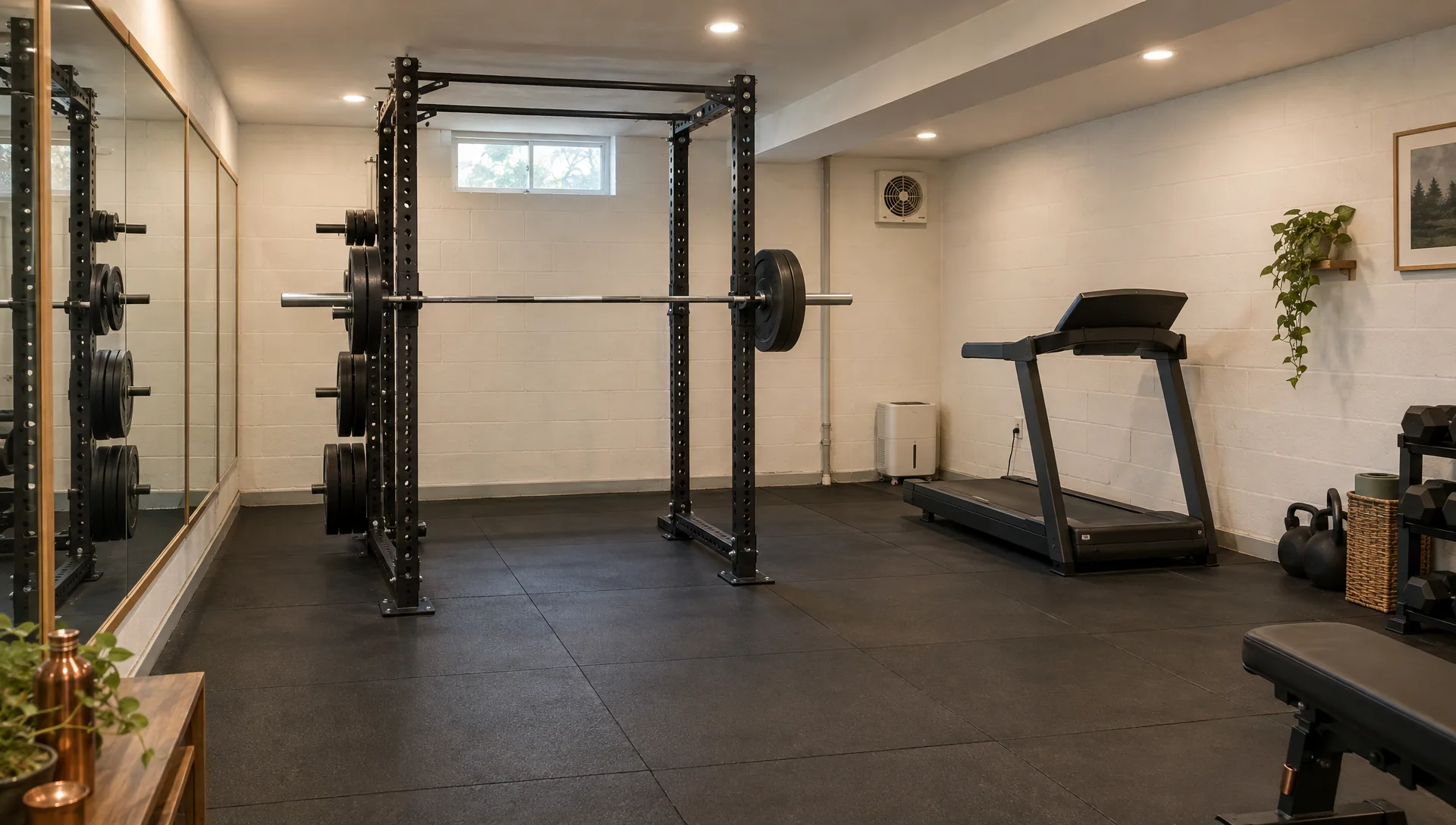
Basements are the usual home for weights because a concrete slab under them is well suited to it. The things that let you down are not the weights. They are humidity, a low ceiling and a floor that was chosen for looks.
Floors that take the abuse
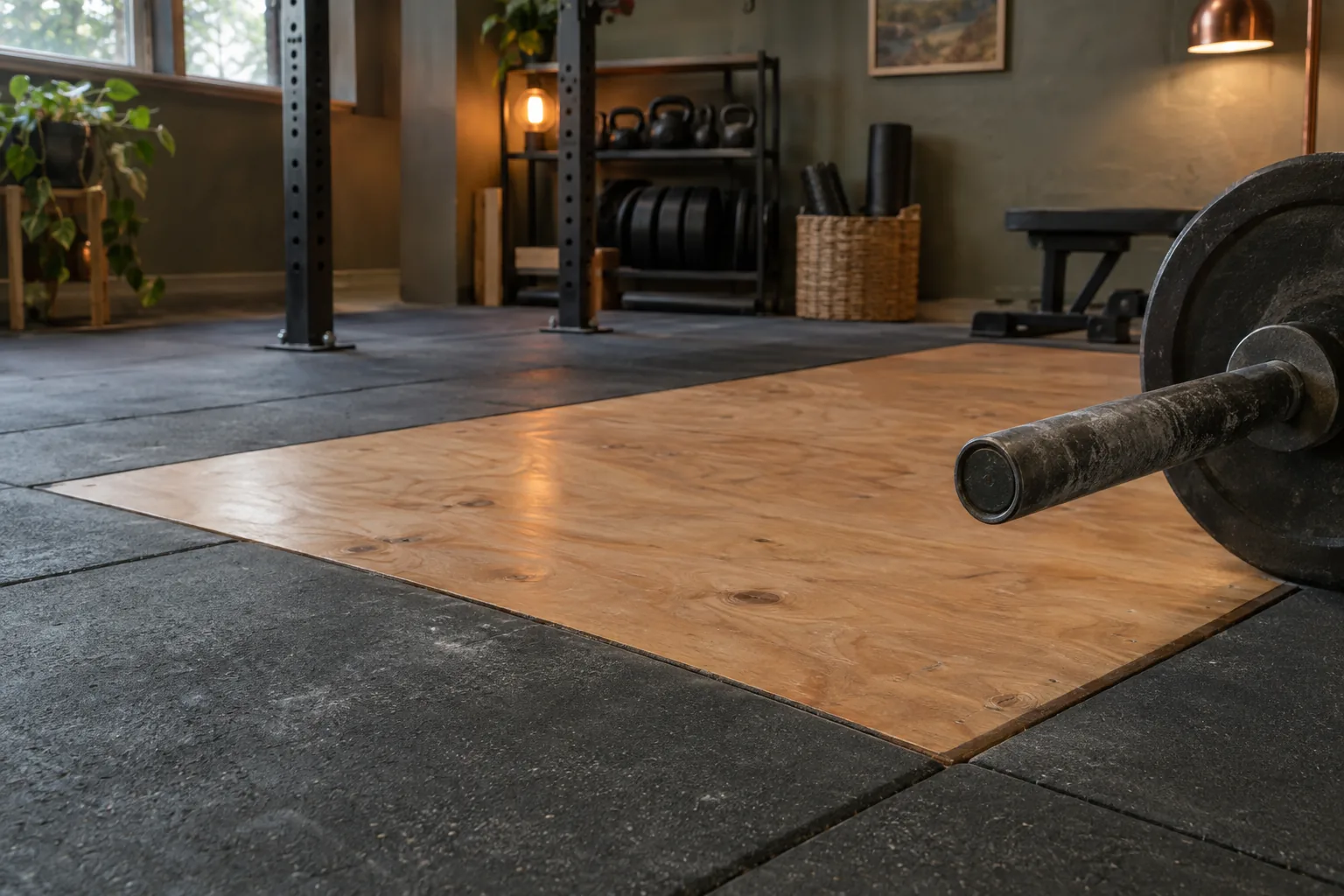
Rubber flooring in rolls or tiles is the working standard for lifting and cardio zones. A gym floor does two jobs: it protects the slab and the equipment, and it keeps impact from traveling into the house frame. If you drop weights, a thicker rubber layer or a platform in the lifting area spares the floor and the house above.
Put the heavy zone on the slab, not on a raised wood subfloor. Where the whole room is on a raised floor, have it laid out so the heavy equipment sits near the walls.
Air and humidity
Someone training in a basement can add a surprising amount of moisture to the air. Basements that already run humid get worse. A dehumidifier that drains by gravity or by a pump to a floor drain, a fan that moves air even when no one is training and an exhaust path for the hottest part of the day are practical. Mirrors and equipment fog first when it is too damp.
Not sure what applies to your house?
Send photos of your basement with an estimate request, or call 847.962.4689. Robert will tell you what he would look at first.
Ceiling height
Overhead presses, jump rope, kettlebell swings and pull-up bars all assume a ceiling you can reach under. Measure the clear height under the lowest beam or duct in the zone where the activity will happen, not the average height of the room. In a low basement the training area can go where the ceiling is highest and storage under the soffits.
Power, light and the stairs
- Treadmills and some other cardio equipment want a dedicated circuit; ask for it by name.
- Light the room evenly and glare-free; a mirror wall doubles any glare problem.
- Check the stair width and turns before you buy a large machine; many a rack is assembled in the room it will live in.
- Leave a clear route to the exit; a gym is a place where people can fall.
How it is priced
Flooring, ventilation or dehumidification and electrical circuits are separate lines from the walls and paint. Each part is written up in your scope before work starts, and anything new is a change order you approve first. What shapes the price of a basement
Questions
Do I need a stronger floor for weights?
A slab on soil is usually well suited to weights; a cracked or heaved floor needs a look first. The questions are protecting it and keeping the noise down.
Should I add a mirror wall?
A mirror wall is easy to add before the walls are finished and hard to add later. It needs solid blocking and a moisture plan behind it.
Homes where this comes up
Keep reading
Planning home gyms?
Send photos of the space with an estimate request, or call. You deal directly with the person running your job.