Feature 01
Follow the horizontal datum
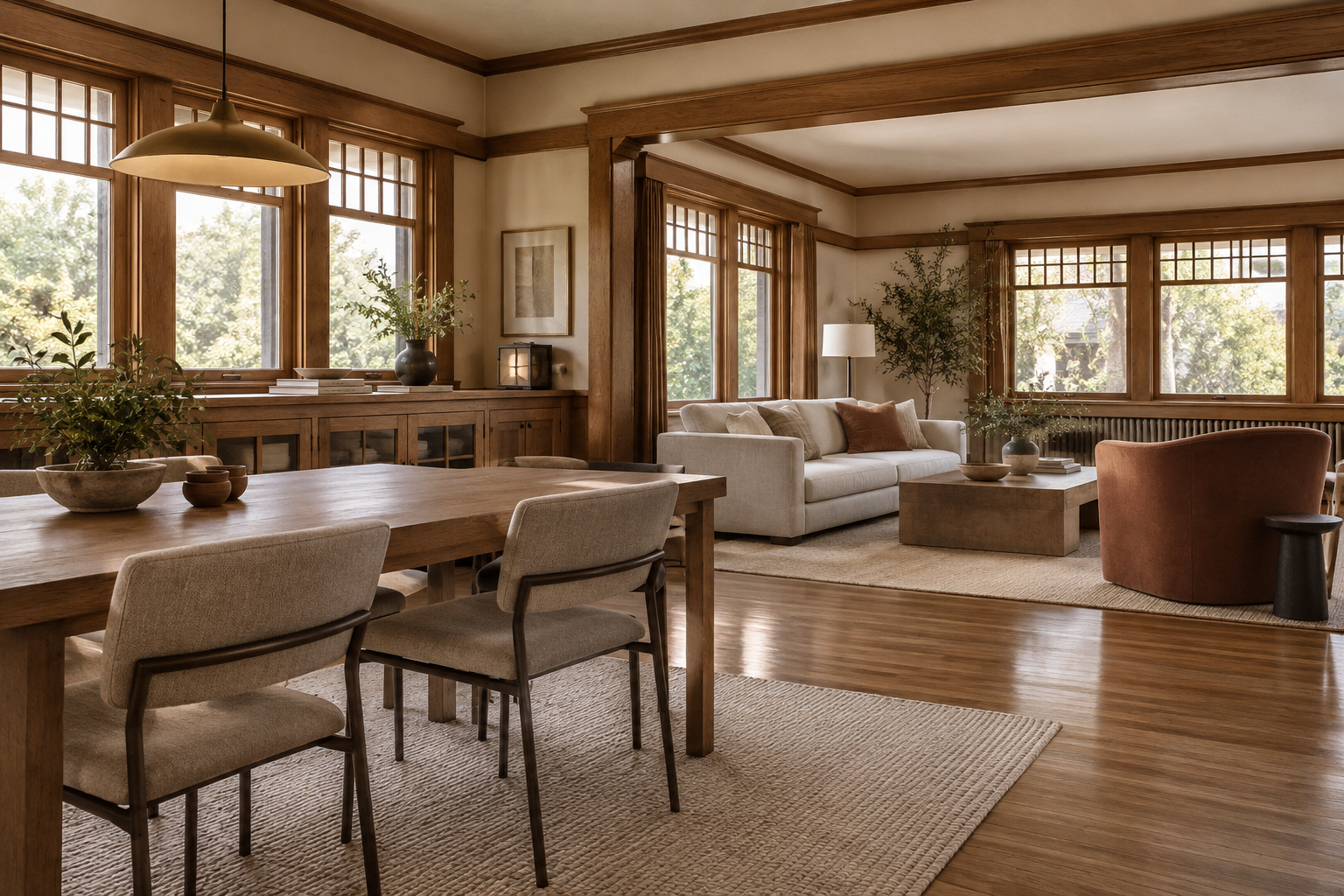
The continuous oak band helps organize both rooms. New cabinetry, art and lighting can respond to that line without copying it as decoration.
Choose the features that leadLet a few existing features lead, then choose contemporary pieces that fit the room and the way it is used.
Look closer
Select a feature to see how new pieces can support the room’s existing proportions without turning it into a period set.

Feature 01
The continuous oak band helps organize both rooms. New cabinetry, art and lighting can respond to that line without copying it as decoration.
Choose the features that leadFeature 02
Low furniture preserves light and the repeated window pattern. Actual furniture selection should use measured sill, radiator and circulation conditions.
Measure the way the room is usedFeature 03
The long cabinet remains useful storage and a visual anchor. Internal fittings may improve function without removing its face or changing the room’s proportions.
Start with retained featuresFeature 04
The substantial opening links living and dining areas while preserving their separate scale. A proposed alteration should be checked against structure, trim and room use.
Compare openings in different house typesFeature 05
Simple low seating gives the woodwork room to lead. Compatibility comes from scale, circulation and restraint—not from repeating a historical motif on every piece.
Use style as a starting pointFeature 06
The dining pendant defines one activity while daylight and portable lamps support others. Fixture appearance does not replace electrical and lighting review.
Select fixtures for use and appearanceDirect answer: Let a few existing architectural features establish the room's character, then choose contemporary furniture and fixtures that fit its proportions and your routines. You do not need matching period pieces. Measure circulation, furniture scale and lighting needs first, and use material and color relationships to make old and new feel intentional.
Concept A

Simple contemporary shapes give elaborate architecture room to lead.
An existing fireplace, bay, stair, built-in or detailed doorway can give a room identity. Photograph those features and note their color, scale and texture. Then decide which new pieces should sit quietly beside them and which should provide contrast.
Avoid turning every element into a focal point. An elaborate mantel may work best with simple upholstery and restrained lighting. A modest room with little ornament may welcome a more expressive contemporary pendant or table. These are design choices, not claims about the house's original decoration.
Draw the furniture, door swings and walking routes. Check where chairs move when someone sits down, whether drawers can open and whether a piece blocks a radiator or service access. Measure the delivery route as well as the destination: a sofa that fits the room may not pass the stair or entry.
In a bungalow or worker's cottage, shallower storage and appropriately scaled seating may create more usable space than a larger room filled with oversized furniture. A vintage condo's lift, common stair and move-in arrangements may affect what can be brought inside. Do not order the largest piece first and plan the room around the problem afterward.
Concept B · Keep the table, modernize the company

A favorite older piece can anchor a contemporary scheme without a matching period suite.
Tradeoff: Reuse adds continuity; chair fit, circulation and delivery still need checking.
Compare the related planning guidePrairie: Test low furniture, horizontal groupings and uncluttered sightlines where they complement surviving trim and built-ins. Avoid covering the very features that give the room its rhythm.
Craftsman and Arts and Crafts: Let existing wood tones anchor the palette. Simple contemporary pieces can sit beside a substantial built-in without copying every joinery detail or adding invented period ornament.
Tudor Revival: Try lighter textiles and a clear lighting strategy around a weighty fireplace or dark timber detail. A room does not need imitation medieval fittings to feel coherent.
Colonial Revival: Use balanced arrangements where the room supports them, but do not force symmetry across unequal openings. Mix a traditional table or cabinet with quieter modern seating.
Queen Anne and Victorian: Give a bay, stair or detailed ceiling space to be seen. Contemporary curved seating or a simple table can respond to an irregular room without a roomful of reproduction furniture.
Detail vignette

Task and ambient light can work with weighty historic details without imitation period fittings.
Plan ambient, task and reading light around activities. Review glare, control locations and maintenance access. New electrical and plumbing fixtures must be appropriate for their location and installation; period appearance is not evidence of present-day safety or compatibility. Have existing wiring, supports and connections checked where relevant.
A new bathroom can have modern fittings and easy-to-clean surfaces while its cabinet proportions or door detail relates to the adjoining house. You do not need to disguise every new element as old. When significant historic material is involved, use a considered retention and compatibility strategy rather than speculative imitation. NPS rehabilitation standards (opens in a new tab)
Furnish and finish: Start with samples, furniture layouts and lighting mockups. Services and reconfigure: Coordinate fixture positions with walls, cabinets and connections. Full rehab: Set a small family of materials early, then adapt it by room rather than making every space identical.
Sources checked October 24, 2026. The guidance is general planning information. Existing conditions, coordinated professional design and current property-specific approvals control the work.
Bring photos of the details you love and the furniture you want to keep. We can start the conversation with those, rather than a blank-room look.